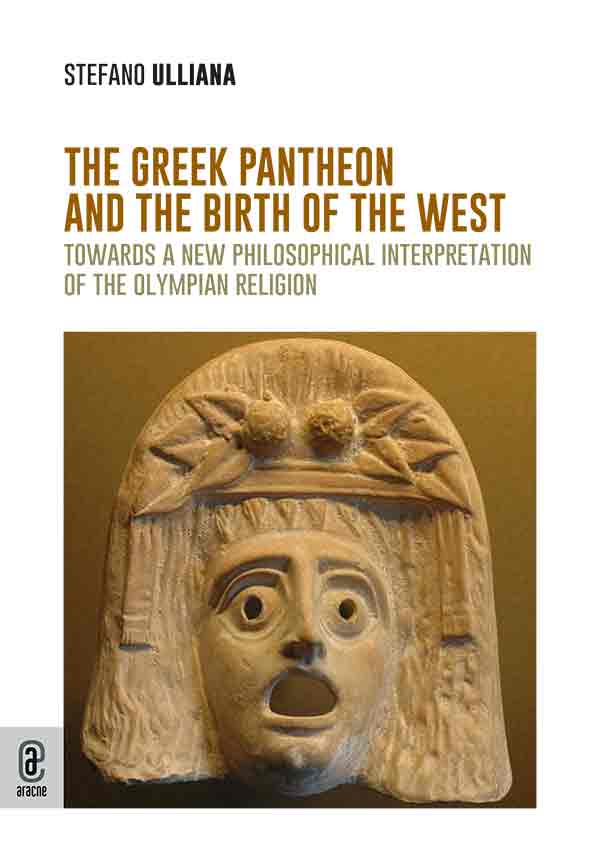
This study proposes a new philosophical interpretation of the classical Greek Pantheon by examining its role in the formation of the metaphysical imagination of Western civilization. Rather than approaching Greek religion exclusively from historical, philological, or anthropological perspectives, the present work investigates the symbolic organization of the Olympian gods as the expression of a profound transformation in the conception of reality, nature, divine power, and human agency. The central thesis argues that the Olympian religion represents one of the decisive historical moments in which an abstract, hierarchical, and apparently transcendent conception of infinity achieved its first coherent symbolic formulation. Through the progressive reorganization of divine functions and the establishment of Zeus’ universal sovereignty, Greek religion contributed to the emergence of a metaphysical paradigm that would later be systematically developed by Platonic and Aristotelian philosophy, incorporated into Christian theology, and eventually secularized within modern Western rationality. Against this dominant tradition, the study reconstructs an alternative philosophical genealogy rooted in the creative and dialectical conception of infinity first articulated by Anaximander and subsequently re-emerging in Epicurus, Lucretius, Giordano Bruno, Spinoza, Feuerbach, and Marx.